

Prime rib, ribeye, brisket and tenderloin – all popular, high-value beef cuts Americans naturally reach for. But what about those cuts that don’t fit into the typical taste preferences of consumers in the U.S. – what happens to them?
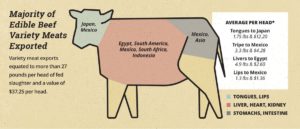
There’s very minimal demand for beef variety meats like tongue, lips, liver, heart, kidney, stomach and intestine here in the U.S. Still, across the world, international consumers are eager to get their hands on these U.S. beef products – and they’re willing to pay a premium for them.
Receiving Top Dollar
To get those premium prices, the U.S. Meat Export Federation (USMEF), a contractor to the Beef Checkoff, creates and shares innovative ways to serve and eat U.S. variety meats, then markets those meats to the proper audiences across the world. Because of their efforts, the U.S. is the world’s largest exporter of edible beef variety meat.
USMEF works to capitalize on international taste preferences and add value back per head for the U.S. producer. For example, beef tripe, the lining of a cow’s stomach, while not particularly popular in the U.S., is commonly used to flavor soups like Menudo in Mexico. U.S. tripe exports to Mexico equated to $4.28 per head of fed cattle slaughter in 2019 and reached more than $111.7 million in revenue. This was up 30 percent from 2018 1.
In Japan, the dominant destination for U.S. beef tongue, a major beef bowl restaurant chain, Yoshinoya, recently launched its first-ever dish featuring U.S. beef tongue at a price of about $8. Growing demand for this product in Japan contributed to 2019 exports of U.S. beef tongue, equating to $12.20 per head of fed slaughter2.
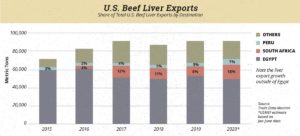
USMEF also works to expand these products into a wider range of markets. In recent years, U.S. beef liver exports have become more diversified. Egypt has long been the leading destination for U.S. beef livers, but liver exports have relied less on Egypt as demand for the product in Sub-Saharan Africa, Latin America and Asia has grown. USMEF executes campaigns that help elevate the growing popularity of this product in these markets.
 For example, in Peru, USMEF launched an initiative to promote the benefits of U.S. beef liver in helping combat anemia. This project included medical students greeting consumers in butcher shops and supermarkets to share information about healthy eating habits and how consuming beef liver increases iron intake. The motivation for this campaign came from a Peruvian Health Ministry report that revealed anemia cases in Peru have risen in recent years due to iron-deficient diets, with the country’s national anemia rate in children at a startling 47 percent. This campaign was a massive success. Arisa, a distributor that deals mostly with wet markets in Lima, Peru, experienced a 23 percent increase in U.S. beef liver sales during the promotion. Grupesac, a retailer with two outlets where U.S. beef liver accounts for 60 percent of total sales, saw a 22 percent increase3. This campaign is just one example of how USMEF is boosting U.S. beef liver consumption in international markets.
All of these specialized campaigns, like the U.S. beef liver campaign in Peru, are funded by the Beef Checkoff and executed by USMEF staff members worldwide. At USMEF’s 16 international offices, local staff, who live their day-to-day lives in these specific countries, are already integrated into the national culture and help strategize and execute campaigns that fit their country’s needs and preferences. By understanding the language, food preferences and shopping habits, these local team members allow a “boots-on-the-ground” approach. This helps USMEF be relevant and efficient when marketing U.S. variety meats to global consumers.
 Adding Value Back to Producers
These efforts to promote U.S. variety meats ultimately do contribute to producer success here at home. The Beef Checkoff meets the desires of consumers across the world by providing them with the beef cuts and products they most want to purchase. In turn, global competition for these cuts contributes to producers getting the best prices possible and boosts demand for cattle. In 2019, U.S. variety meat exports contributed to more than 27 pounds per head of fed slaughter. This resulted in a per-fed-head value of $37.27 4.
With strong, effective programs and other efforts in place to grow worldwide U.S. variety meat demand, the Beef Checkoff is contributing to the advancement and strength of the industry, both here and abroad.
 4. Product Samplings in South Korea

 Investing dollars toward foreign market development is one of the most significant ways the Beef Checkoff drives demand for beef. Competition is fierce on the global stage, and the checkoff works diligently to persuade foreign countries that U.S. beef is their best choice. As a result of the checkoff’s efforts, more consumers around the world want the high-quality products U.S. cattlemen and women produce.
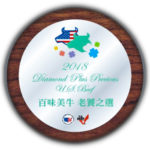 To continue increasing the visibility of U.S. beef, USMEF has established the Diamond Plus Precious Gourmet Selection awards. These awards encourage Taiwanese restaurants to serve and promote U.S. beef. According to Davis Wu, USMEF director in Taiwan, Diamond Plus Precious honors restaurants that demonstrate “the spirit of dependable and faithful partners who support U.S. beef products and promise to provide high-quality U.S. beef cuisine to Taiwanese consumers.” The USMEF first presented these awards in 2018 and will continue to honor deserving restaurants – choosing 20 each year. By creating an incentive for Taiwanese restaurants to feature high-quality U.S. beef, the Diamond Plus Precious awards are helping U.S. beef establish a stronger foothold in that country, while also providing consumers clear and accessible ways to learn about the best restaurants offering these products.
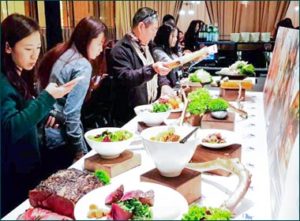 In Japan, USMEF has been conducting a series of training sessions for cooking instructors. The goal is to show these educators the variety of ways to cook and serve U.S. beef, so they can then introduce these creative methods to their students. Rika Yukimasa, a well-known cooking instructor in Japan, has helped USMEF in the campaign, providing cooking tips and sharing information about U.S. beef’s quality attributes with fellow instructors. Tapping into U.S. beef’s superior quality and versatility is an impactful way to spur interest in the product. One training session, during which the USMEF explained the U.S. beef production system, drew thousands of participant applications of which 50 were selected.
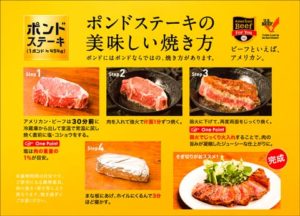 “The number of active Instagram users now exceeds 29 million in Japan – up 150% from a year ago,” said Takemichi Yamashoji, USMEF director in Japan. “Realizing the popularity of social media and how consumers are using it to make decisions on what to eat, USMEF will keep focusing on these kinds of activities to more widely and effectively convey information on U.S. beef.”

 The theme of the Times Square promotion was “Your Sushi is getting Beefed Up!” Giant, colorful images of Beefshi and a link to
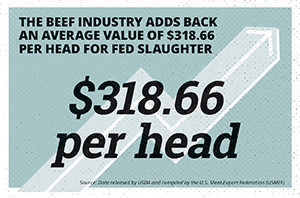 In fiscal year 2018, the Beef Checkoff program invested checkoff funds of $7.36 million in foreign marketing and education because exports represent a significant growth opportunity for U.S. beef producers. By selling U.S. beef in more than 80 countries worldwide, the beef industry adds back an average value of $318.66 per head for fed slaughter to U.S. beef producers, according to data released by United States Department of Agriculture (USDA) and compiled by the U.S. Meat Export Federation (USMEF). USDA research also showed, from January through August 2018, beef export value climbed 18 percent from a year ago to $5.51 billion.

 Without this imported trim, the U.S. beef supply would run far short of the lean ground beef required to meet that consumer demand. A growing number of consumers say they would turn to other, leaner protein options if lean ground beef was unavailable or too expensive.



 “This venue definitely attracts USMEF’s target audience – consumers with a high level of purchasing power who arrive not only from across Ukraine but also from Uzbekistan, Azerbaijan, Belarus, and other countries for vacations and long weekends,” said Galina Kochubeeva, USMEF representative in the region. “The goal for USMEF is to introduce the taste of U.S. beef to the people who attend American Barbecue Fest or visit the Wellness Center with the expectation that they will return home and begin purchasing U.S. beef on their own for family dinners and special occasions.”
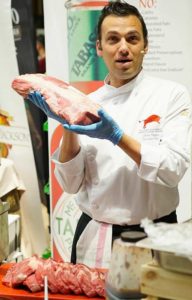 Introducing U.S. beef in a country where it is not well-known, the U.S. Meat Export Federation (USMEF), sub-contractor to the beef checkoff, partnered with the USDA Foreign Agricultural Service (FAS) at the Taste Ambassadors exhibition, an event for HRI professionals in Bucharest, Romania. USMEF joined other agricultural organizations in showcasing U.S. products, presenting new culinary ideas and meeting with Romania’s HRI distributors and their clients.
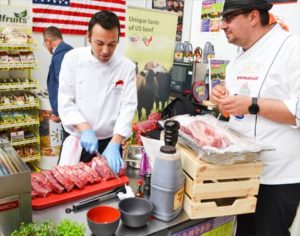 “The goal of USMEF in this kind of market is to educate the HRI audience about U.S. beef, ensure that buyers and traders are aware of the supply of U.S. beef that is available and to introduce beef alternative cuts,” said Barutkin. “In Romania, as is the case with many countries in eastern and central Europe where disposable incomes are rather tight, alternative cuts of U.S. beef present good opportunities for some budget-conscious consumers and allow many more restaurants to feature U.S. marbled beef on their menus.”