My Beef Board Members 
Select State... 
cows with tractor and hay

Frequently Asked Questions

Good and Getting Better: Key Improvements Being Made by Cattle Industry

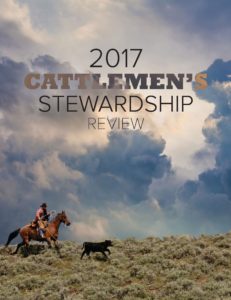
The Cattlemen’s Stewardship Review (CSR) is a Beef Checkoff-funded report highlighting the commitment cattle producers demonstrate in the areas of animal welfare, beef quality, sustainability, and community involvement. The CSR gathers data from an independent 2017 telephone survey of beef producers to deliver a comprehensive profile of the U.S. beef community today. The report and survey were coordinated by the National Cattlemen’s Beef Association (NCBA) as a contractor to the Beef Checkoff program.
The CSR shows that improvements have been made in all four of the cattle industry areas studied. The report and information will be presented within a national news release to national media outlets, as well as sent to key national media by the NCBA communications team, as a Beef Checkoff contractor.

“We want consumers to know we aren’t just farmers and ranchers, but also animal caretakers, nutritionists, small business owners, environmentalists, and members of our communities,” said Joan Ruskamp, Cattlemen’s Beef Board chairman and co-owner of J & S Feedlot in Nebraska. “This report is a way to benchmark our progress, celebrate our successes and identify opportunities for improvement.”


A few brief, yet key takeaways from the survey include:

  • The well-being of cattle is the top priority for 95% of producers.
  • 97% of cattle farmers and ranchers believe producing safe beef is crucial to the future of the industry.
  • About 95% of producers say conservation of land is extremely important to them, while 86% manage their operations in a way that protects the quality of natural resources, including wildlife and biodiversity.
  • Over 90% of cattle operations are family owned, and 78% of farmers and ranchers say they intend to pass their operations on to future generations. In fact, 58% of current operations have been in the family for at least three generations.

“When consumers understand the level of care that goes into the production of their beef, they feel better about enjoying it,” said Ruskamp. “This report helps show that [producers’] attention to the needs of our animals, land, and relationships parallel the concern our customers have for the beef they eat.”

To view the full report, go here.


cows with tractor and hay

Frequently Asked Questions

CENTENNIAL, CO — More than 20,000 individuals have gone online to obtain Beef Quality Assurance (BQA) certification since online training modules were relaunched on Feb. 1, 2017. BQA certifications are also available at in-person training events offered through state beef councils, cattlemen’s affiliates, extension programs and other local efforts throughout the country. The BQA program is funded by the Beef Checkoff Program.

By showing how common-sense husbandry techniques can be coupled with accepted scientific knowledge to raise cattle under optimum management and environmental conditions, BQA helps beef producers capture additional value from their market cattle, and more. It also reflects a positive public image for the beef industry and instills consumer confidence in it. When producers implement the best management practices of a BQA program, they assure their market steers, heifers, cows and bulls are the best they can be.

The online BQA experience is tailored to each participant by industry sector and interest. After registering, participants are taken through an interactive training module that can be completed online, anytime, with participants starting and stopping training at their convenience without losing progress. Categories for training and certification include Cow-Calf, Stocker, and Feedyard. Online training and certification is available for free and accessible twenty-four hours a day, seven days each week, making it a convenient option for busy farmers and ranchers.

States with most online certifications to date are Texas, Kansas, Iowa, Tennessee and California.

To find out more about BQA online certification, go to www.bqa.org/certification.

family eating dinner

Frequently Asked Questions

The Beef Checkoff works to build consumer confidence at every stage of beef production. These investments help drive demand for beef, and are all part of a comprehensive strategy focused on safety, quality, animal welfare, antibiotic stewardship and consumer education.

“When consumers understand the level of care that goes into the production of their beef, they feel better about enjoying it,” says Joan Ruskamp, Cattlemen’s Beef Board.

With the U.S. becoming a more health-conscious society, it is important the beef industry is dedicating resources to educate consumers on the benefits beef provides in order to maintain healthy diet.

“Research study after research study show that you can eat beef, even every day, and lower your cholesterol,” says Shalene McNeill, executive director of Nutrition & Health, National Cattlemen’s Beef Association.

Researchers recommend that individuals consume 25g of protein at each meal, which is roughly 3 ounces of beef. When compared to other proteins, beef provides consumers with more high-quality protein and fewer calories.

Because of growing misconceptions of beef’s nutritional value and a growing trend for more plant-based proteins, the Beef Checkoff is working with nutritional leaders to educate consumers on the health benefits of eating beef in order to grow consumer confidence and drive demand.

Frequently Asked Questions

Consumer purchasing decisions directly impact the way producers raise beef. The Beef Checkoff invests dollars toward meat profiling and product development, which helps drive demand at the meat counter and increases the overall value of beef.

Chuck Kiker, beef producer from Texas, is proud of the work the checkoff has done to deliver lean cuts the consumer wants.

“Meat profiling and developing new products is one of the best things the checkoff has done to make the value of that carcass go up,” says Kiker.

“We had so many cuts of meat that weren’t high-dollar cuts that would end up in grind, and it was very important to add value to those cuts. That is one of the things the checkoff has been able to do.”

By investing in muscle profiling research, the Beef Checkoff has been able to identify lean, tender muscles that consumers find desirable. The flat iron steak and petite tender are two examples of beef products that became available as a direct result of checkoff investments.

“It gave [the food service industry] an alternative to a high-priced steak dinner,” says Kiker. “They could go with a petite cut tender or a flat iron steak and have beef on the menu. That was huge for the beef industry and put a lot of money back into the value of that carcass.”

The Beef Checkoff has made investments to ensure beef remains a top protein choice amongst consumers. Through research and promotion, consumers have more options than ever when it comes to purchasing beef cuts.


chopsticks

Frequently Asked Questions

Via The Cattle Site

INDONESIA — Sharing information about U.S. red meat products available in Indonesia and educating chefs on ways to improve profits by using new cuts, USMEF, a contractor to the Pork and Beef Checkoffs, conducted a chef training seminar in Singapore.

Funded by the Pork Checkoff and the Beef Checkoff program, the trainings included cooking demonstrations and tastings featuring several U.S. pork and beef dishes.

Sabrina Yin, USMEF director in the ASEAN region, provides a U.S. beef cutting demonstration to Indonesian chefs and foodservice industry professionals.

Employees of Scenia, an Indonesia-based importer, and chefs who work for the company’s clients were chosen to participate in the training.

“Scenia started importing U.S. pork and beef in 2009 and has consistently imported close to 160 tons combined on a monthly basis, so it is a very reliable customer,” said Sabrina Yin, USMEF ASEAN director. “Our goal for the seminar was to give participants a general overview of the U.S. red meat industry and then let them actually taste some of the products prepared using several cooking methods to showcase the versatility of U.S. pork and beef.”

On the first day, Ms Yin focused on U.S. beef, leading discussions on the product’s quality and providing details about the U.S. production system. U.S. beef cuts highlighted in the session were rib fingers, short plate, heel muscle, top blade muscle and bone-in short ribs.

Ms. Yin demonstrated the process of breaking down the various cuts, while USMEF Regional Chef Melvin Ho prepared a lunch incorporating a variety of local flavors by using Asian spices and curries.

“The idea was to encourage participants to utilize U.S. beef when developing their menus,” said Ms. Yin. “This is a way to show decision makers not only what is available in the Indonesian market, but also give them some inspiration on how they can use these cuts to not only make their menus better and more attractive, but also help their businesses be more profitable.”

Several food service topics were discussed, including food hygiene, promotional support and cooking. A retail visit was also part of the seminar, offering the chefs and food buyers a look at the U.S. red meat options available in supermarket meat departments.

Frequently Asked Questions

Press Release via U.S. Meat Export Federation

Calendar year 2017 was a record-setter for U.S. beef exports, with values exceeding $7 billion for only the second time.

Beef exports totaled 2.8 billion pounds, up 6 percent from 2016. This was the fourth-largest volume on record and the second-largest of the post-BSE era. Beef export value reached $7.27 billion, up 15 percent year-over-year and 2 percent above the previous high achieved in 2014 (to $7.13 billion).

For December only, beef export value was up 9 percent from a year ago to $672.9 million – the second-highest of 2017 and the third-highest on record. December volume was down 3 percent from a year ago to 249.7 million pounds.

Beef exports accounted for 12.9 percent of total production in 2017 and 10.4 percent for muscle cuts, down from 13.7 percent and 10.5 percent, respectively, in 2016. Beef export value averaged $286.38 per head of fed slaughter, up 9 percent from 2016 and the second-highest on record, trailing only the $300.36 average posted in 2014.

Japan leads beef export growth; value records fall in other key markets

Japan solidified its position as the leading market for U.S. beef in 2017, with volume climbing 19 percent year-over-year to 678.1 million pounds and value up 25 percent to $1.89 billion – new post-BSE records. Chilled exports to Japan expanded even more rapidly, reaching 327.8 million pounds (up 32 percent) valued at $1.102 billion (up 37 percent) as U.S. beef captured more than half of Japan’s imported chilled beef market – a new high for U.S. market share. Japan accounts for nearly $75 in export value per head of fed slaughter and delivers critical premiums for certain cuts. For example, Japan’s imports of U.S. beef tongue averaged $12.13 per head and $26.44 per head for short plate.

The U.S. industry is marketing a wide range of beef cuts in Japan and the market holds potential for additional growth. But market access is a concern, with imports of Australian and Mexican beef subject to significantly lower duties and beef from Australia, Canada, New Zealand and Mexico all poised to gain further tariff relief through the Comprehensive and Progressive Agreement for Trans-Pacific Partnership (CPTPP).

Other 2017 beef export highlights include:

  • Beef exports to South Korea increased 3 percent in volume (to 406 million pounds) and climbed 15 percent in value to $1.22 billion, easily outpacing the previous year’s record. Chilled U.S. beef rose, increasing 73 percent in volume (to 99.5 million pounds) and 78 percent in value (to $405.8 million). Demand is especially strong in the Korean retail sector, where consumer confidence in the quality and safety of U.S. beef continued to gain momentum. Korea’s imports of U.S. beef are now subject to a 21.3 percent tariff, down from 24 percent in 2017 and well below the 40 percent rate in effect prior to implementation of the Korea-U.S. Free Trade Agreement (KORUS). The tariff rate is scheduled to decline to zero by 2026.
  • Mexico remained the second-largest volume market (524.6 million pounds, down 2 percent from 2016) and third-largest in value ($979.7 million, up slightly). It is an especially important market for U.S. beef shoulder clods, rounds and variety meat.
  • Exports to Taiwan set a new value record, increasing 13 percent from a year ago to $409.7 million. Volume was up 2 percent to 98.8 million pounds. U.S. beef holds 72 percent of Taiwan’s chilled beef market, the highest share of any Asian destination. Taiwan is a key market for secondary beef cuts such as the clod, heart, petite tender and top sirloin cap.
  • Demand in Hong Kong rebounded from a slow start to post a strong performance in 2017, increasing 16 percent in volume (288.2 million pounds) and 29 percent in value ($884.1 million). After China’s mid-year lifting of its ban on U.S. beef, exports to China totaled 6.7 million pounds valued at $31 million. While eligible supplies remain limited due to China’s import restrictions, the market holds significant growth potential and is already one of the highest value markets for U.S. beef on a per-pound basis.
  • Record exports to the Philippines and Singapore and strong growth in Indonesia and Vietnam pushed up export volume to the ASEAN region by 37 percent to 90.3 million pounds, while value climbed 34 percent to $210.9 million.
  • Strong performances in Chile, Peru and Colombia led the way for U.S. beef in South America, where export volume increased 24 percent to 62.6 million pounds and value was up 23 percent to $114.8 million. Shipments to Brazil, which resumed in April after a 13-year absence, totaled 4.5 million pounds valued at $7.4 million.
  • Led by strong beef liver demand in South Africa, exports to Africa increased 78 percent in volume (to 48.5 million pounds) and 74 percent in value (to $22 million). Since reopening to U.S. beef in 2016, South Africa has emerged as the sixth-largest destination for U.S. beef variety meat and second-largest for livers.
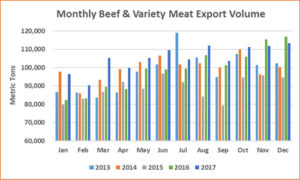
    The above data was released by USDA and compiled by the U.S. Meat Export Federation (USMEF), sub-contractor to the beef checkoff. Complete 2017 export results for U.S. beef are available on USMEF’s statistics web page. Monthly charts for U.S. beef exports are also available online.

If you have questions, please contact Joe Schuele at jschuele@usmef.org or call 303-226-7309.

truck driving in pasture

Frequently Asked Questions

Press Release Via NCBA

The National Cattlemen’s Beef Association, a contractor to the Beef Checkoff, has announced the winners of its prestigious 2018 Beef Quality Assurance (BQA) Awards at the 2018 Cattle Industry Convention in Phoenix, Arizona.

The National BQA Award recognizes outstanding beef, marketer and dairy producers that demonstrate animal care and handling principles as part of their day-to-day operations. A common trait among all contest entrants must be a strong desire to continually improve BQA on their operations while encouraging others to implement the comprehensive cattle management program. The awards focus on five categories, including Cow-Calf, Dairy, Feedyard, Marketer and Educator of the Year.

2018 BQA Cow-Calf Award

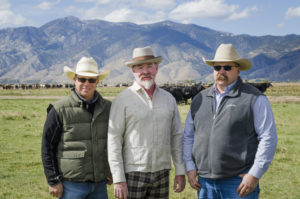
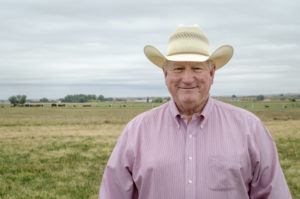
Bently Ranch, located in Minden, Nevada, is the recipient of the 2018 Cow-Calf BQA Award. The ranch has a focus of doing the right thing in all aspects of beef production. Bently Ranch takes on a relaxed and low-stress attitude with a commitment to proper animal care and handling. With a recent focus on selling direct to the consumer, the ranch has noticed a big difference in the quality of their cattle thanks to implementing BQA practices.


2018 BQA Dairy Award

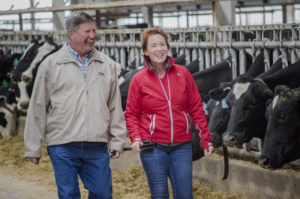
Kraft Family Dairies, located in Fort Morgan, Colorado, is the winner of the 2018 BQA Dairy Award. Simply put: they care for their cows. By combining their passion with a focus on preventative health management, the farm showcases their commitment to BQA guidelines in every step of their dairy operation. What makes Kraft unique is its two-farm operation. One site houses healthy cattle. The other takes in animals that may need a little TLC. By using this two-site system, Kraft Family Dairies has drastically cut down on the number of cattle in the hospital.


2018 BQA Feedyard Award

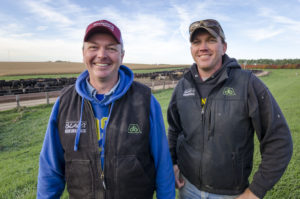
The winner of the 2018 BQA Feedyard Award is BLAC-X Farms in Rock County, Minnesota. Between the two minds of the Bakken brothers, Jay and Peter, they share an extensive knowledge of the feedlot, cow-calf herd and crop operations. With a focus on education, they participate in several research projects and share their ideas on the best BQA practices with hundreds of others during tours of their operation.


2018 BQA Marketer Award

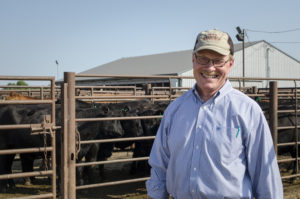
Central Livestock in South St. Paul, Minnesota, has been named the 2018 BQA Marketer Award winner. Their marketing practices encourage producers to focus on BQA vaccination standards by incentivizing vaccinations in the sale ring. Cattle that are up-to-date on vaccinations sell for higher prices. They also have step-by-step guides for producers to follow that highlight animal safety, ultimately yielding the best cattle.


2018 BQA Educator of the Year

Dr. Ron Gill is the winner of the 2018 BQA Educator of the Year award. In addition to his responsibilities as professor at Texas A&M University, Dr. Gill takes his lessons outside the classroom and into the field for collaborative, hands-on demonstrations through NCBA’s Stockmanship and Stewardship program. Not only an avid proponent of BQA practices, he’s also helped develop some of the BQA guidelines that many producers follow today.


Award winners are selected by a committee comprised of BQA certified representatives from universities, state beef councils, sponsors and affiliated groups, who assess nominations based on their demonstrated commitment to BQA practices, their service as leaders in the beef industry and their dedication to promoting the BQA message to grow consumer confidence.

Four National BQA Awards (Cow-Calf, Feedyard, Dairy and Marketer) are funded in part by the Beef Checkoff program with additional financial support provided by Cargill. The BQA Educator Award is funded in part by the Beef Checkoff program with additional financial support provided by Boehringer Ingelheim.

You can read more on each of the award winners’ operations at https://www.bqa.org/about/bqa-awards.

Media can contact Kellie Wostrel, APR, (402) 818-1114, kelliew@swansonrussell.com for a media kit including pre-written stories, videos and photos.

purple sky

Frequently Asked Questions

Beef producer Joan Ruskamp from Dodge, Nebraska, was elected by fellow Cattlemen’s Beef Board (CBB) members to serve as CBB chairman in 2018. The vote came during the 2018 Cattle Industry Annual Convention in Phoenix, Arizona.

Get to know Joan in the following interview:

Tell us about yourself and your history in the beef industry.

I grew up in Grand Island, Nebraska with dreams of living on a farm. My dreams were fueled by stories from my dad’s childhood experiences on the farm and my exposure to ranch life from extended family members on my mom’s side. My love for animals grew from dogs and cats to buying a horse with detasseling money. That interest in animals eventually led me to the Nebraska College of Technical Agriculture in Curtis, Nebraska where I received an associate’s degree in veterinary medicine.

A three-month work experience program in O’Neill, Nebraska strengthened my desire to work around cattle. While working for a mixed practice veterinary clinic in Fremont, Nebraska, I met my husband, Steve. Our first date was riding horses around his family’s farm and feedlot. We married in 1981 and had the opportunity to buy the farm Steve’s dad grew up on.

We grew the feedlot from a few hundred cattle to a few thousand by custom feeding. My role has always been in the cattle doctoring and processing area, along with record keeping. Working on a farm, raising five children, and volunteering in the community gave me little extra time for other organizational work. As our last child graduated from high school, I began sharing the beef story with consumers. My appointment to the Cattlemen’s Beef Promotion & Research Board (CBB) has allowed me to serve the beef community by bringing my producer experience and passion for beef together.

What do you believe is the biggest strength you bring to the table as chairman?

I believe my biggest strength is my passion for communicating the beef story. I live the beef story and see first-hand the commitment to quality care and improvement from farmers and ranchers like Steve and I.

There was so much I didn’t know about farm life until I lived on a farm, so I understand the disconnect consumers have. As our checkoff continues the work of growing demand for beef, I hope to channel my passion into serving the beef community as a trusted leader.

Tell us about your family.

My husband, best friend, and business partner for over 36 years is Steve Ruskamp. He is a fourth-generation farmer and cattle feeder. We have been blessed with five amazing children and the people they have brought into our family.

Our oldest daughter, Ginger, is married to her childhood sweetheart, teaches high school English, and has two daughters. Scott, our second oldest, is a computer engineer in Santa Barbara, California. He is married, and they are expecting their first child in May. Scott is also fluent in Japanese. Our next oldest, Emily lives in Chicago, and is also married with one son. Emily works for the Archdiocese of Chicago jail ministry. Jeff is our fourth child, and is currently living in Chincha, Peru. He graduated with a degree in architectural engineering and decided to follow another calling as a consecrated lay person. He is in his sixth year of formation with the Sodalitium Christianae Vitae. Emily and Jeff are both fluent in Spanish. Kim is our youngest; she is married, and they are expecting their first child in March. Kim is a middle school math teacher in Lincoln, Nebraska.

What do you hope to accomplish during your year as chairman?

During my year as chairman, I hope to see a growth in the understanding of the Checkoff program among producers. I have watched the beef community grow in distrust of the Checkoff, while on the outside I am working to communicate a message of trust to the consumer about the beef we produce.

I intend to continue the high level of integrity and team approach modeled to me by my predecessors Kim Brackett, Jimmy Maxey, Anne Anderson, and Brett Morris. With a new CEO, I hope to build new industry relationships, strengthen current relationships, and continue to keep the focus on serving the producers by increasing demand for beef.

What do you see as one of the biggest challenges facing the Checkoff and the industry?

The Checkoff continues to face challenges from a variety of organizations about the value of beef in the diet, as well as organizations like HSUS and PETA which challenge our care ethics. Those challengers come with seemingly unlimited funds. The Checkoff program has a much smaller budget which must provide quality research and information about the nutritional value and sustainable practices of beef to the consumers, and at the same time provide resources like Beef Quality Assurance to producers. The Beef Checkoff is our producer-funded front line to defend and safeguard beef producers from misinformation about beef.

The Beef Checkoff program also faces challenges from within the beef community. I believe the Beef Checkoff program is the place all beef producers can come together as visionaries, goal setters, and decision-makers to drive demand for beef.

What would you like every investor to know about their Beef Checkoff program?

The Beef Checkoff program is producer-funded, producer-led, and producer-driven. In 1988, 79% of beef producers voted by referendum to approve the collection of $1/head for promotion, research, and information. What has the beef community gained over the past 30 years from that investment? Research shows we have an ROI of $11.20/dollar invested, but what producers can easily see are:

  • Adding value to the carcass with new cuts of beef like the flat iron
  • Developing solid research on the nutritional benefits of eating beef
  • Helping producers develop standards of care to add consistency and value to beef products
  • Providing sustainability research about the importance of cattle to the environment at the national and global levels
  • Developing and strengthening export markets, which adds more value to the carcass through demand for beef and the offal desired in numerous countries around the world
  • Engaging in the digital age of communication through active participation and behind-the-scenes crisis management. You might remember the first mad cow report in December of 2003, but did you even hear about the last one?

These are just a few of the activities provided by the checkoff.

Before I was appointed to the Cattlemen’s Beef Board, I had only a glimmer of an understanding of everything the Beef Checkoff does and how important the role of producers is in guiding the program. I have learned there are numerous checks and balances in place to make sure Checkoff dollars are managed according to the Act & Order. I have learned every producer has the responsibility for making sure Checkoff dollars are collected when cattle are sold. I have asked questions about contract requests and joined other board members in appreciation of the professional work done by contractors to the Beef Checkoff. I have met some incredible people with godly virtues working on behalf of the Checkoff program to make sure our investment is used wisely.

Just like other farmers and ranchers, my husband and I will keep working hard to care for our cattle, and hopefully make wise marketing decisions. It’s good to know I am part of a team working to keep beef on the plate so we can possibly pass this opportunity down to a grandchild.
beef poke bowl

Frequently Asked Questions

Beef quality, consumer incomes, attention to beef in medical journals and the general media, and shifts in race composition of the U.S. population are key determinants affecting beef demand in the long term.

So concludes a study commissioned by the Beef Checkoff program called “Assessing Beef Demand Determinants.” The study summarizes the current knowledge of consumer demand for beef, and identifies the best opportunities for the industry to influence demand positively.

Authors of the report include Dr. Glynn Tonsor, professor of livestock marketing at Kansas State University, Dr. Jayson Lusk, distinguished professor and head of the Department of Agricultural Economics at Purdue University, and Dr. Ted Schroeder, professor of livestock marketing at Kansas State University.

“The information gathered and analyzed for this comprehensive report is invaluable to the beef industry, in general, and to the Beef Checkoff program, in particular,” said cow-calf producer Jackie Means, a member of the Cattlemen’s Beef Promotion & Research Board and chair of the Joint Evaluation Committee that commissioned the research for the checkoff. “Members of the Cattlemen’s Beef Board and directors of the Federation of State Beef Councils will be asked to use the information in this report in making decisions about how to invest Checkoff dollars in Fiscal Year 2018 and beyond.”

Understanding Beef Demand

Understanding beef demand and how to affect it is a daunting task, yet the report’s authors note that it also is critical to the industry’s long-term viability.

Given the state of the cattle industry’s supply, the understanding of beef demand vs. consumption is particularly critical.

One very important point in developing strategies to grow beef demand will be clarification of the role of per capita consumption in beef demand. Per capita consumption is, in effect, per capita availability of beef, the economists note. Demand, on the other hand, effectively refers to the quantity of beef that consumers will purchase at a given price, with all other factors held constant.

“Beef purchasing decisions have become less sensitive to retail beef prices. While prices will always matter, this reinforces the importance of industry focus on beef quality aspects: taste, appearance, convenience, and freshness,” said Dr. Tonsor.

“In short, both beef supplies and cattle prices increased in 2017 relative to 2016 – an outcome only possible with demand growth,” the report notes. “A perpetual industry priority is to better understand and monitor beef demand, and to inform stakeholders because demand directly influences overall industry success.”

What is Important to Beef Producers?

It has been a critical need for the industry to understand what beef demand is: Is it as strong today compared to the past? What has made it strong? Those kinds of basic questions have been important to the Beef Checkoff for a very long time. If beef demand is strong, then higher prices are being paid for beef than would otherwise be the case. That’s because higher prices being paid for beef in turn leads to higher prices for wholesale beef, higher fed cattle, and higher feeder cattle prices, and most producers recognize that benefit in the form of higher cattle prices.

One of the things the research did was to update elasticity estimates, or how sensitive purchasing behavior is to prices. If the price goes up by 1%, how many fewer pounds are purchased? This study showed U.S. consumers are less sensitive to beef prices than they used to be. That does not mean price doesn’t matter, but the numbers showed that a 1% increase in price has a smaller impact on beef consumption than it used to.

“What I believe that signals is that beef quality issues such as taste, appearance, and freshness have elevated over time,” said Dr. Tonsor.

“The tone and impact of ‘hot topics’ covered in the media and medical community can change notably over time,” continued Dr. Tonsor. “In past years, discussions around fat were a detriment to beef demand but more recently these discussions have enhanced beef demand. Similarly, this study shows how Atkins Diet discussions remain supportive of beef demand, but less so than a decade earlier.”

What Can the Checkoff Do?

Based on research, data, and information examined, the researchers prepared five key recommendations for Checkoff leaders to consider in making decisions about how to invest Checkoff dollars:

  1. Beef quality aspects such as taste, appearance, convenience, and freshness are innate product quality attributes identified as top priorities in past beef demand studies, and they remain key for sustaining and growing beef demand.
  2. External coverage of “hot topics” is likely to continue to be dynamic for the beef industry. Researchers made the recommendation for systematic reassessment of which topics have the largest net impact on beef demand and focus on those.
  3. Increase collaborative approaches with the U.S. pork and chicken industries. Given limited cross-price sensitivity and a host of common challenges and opportunities, a more collaborative approach may better utilize the industry’s limited resources given recent increases in competition from plant-based protein sources.
  4. Recommend additional targeting of beef product development, messaging, and marketing to consumers with particular attention to race, income, age, political ideology, and product type considerations.
  5. Conduct a systematic evaluation of information sources available to gain beef demand insight. Multiple data sources and methods were used to gain a more complete understanding of beef demand determinants, and the researchers encouraged more focus on leveraging existing industry investments to regularly assess beef demand.

Download the full study here: “Assessing Beef Demand Determinants.”

Frequently Asked Questions

The 2017 “American Barbecue Fest,” in Truskavets, Ukraine, saw the U.S. Meat Export Federation (USMEF), sub-contractor to the Beef Checkoff, promote several cuts of U.S. beef. Funded by the USDA Market Access Program (MAP) and the Beef Checkoff Program, this year’s annual event preceded a series of U.S. beef retail campaigns in Ukrainian cities. These promotions were funded by the Texas Beef Council.

American Barbecue Fest, held at the Mirotel Wellness Center, attracted foodies from all across Eastern Europe and offered a variety of American-style dishes featuring U.S. beef as the centerpiece.

U.S. beef is regularly served on the buffet at this popular resort as well as on the menu of the attached Bellini restaurant.

“This venue definitely attracts USMEF’s target audience – consumers with a high level of purchasing power who arrive not only from across Ukraine but also from Uzbekistan, Azerbaijan, Belarus, and other countries for vacations and long weekends,” said Galina Kochubeeva, USMEF representative in the region. “The goal for USMEF is to introduce the taste of U.S. beef to the people who attend American Barbecue Fest or visit the Wellness Center with the expectation that they will return home and begin purchasing U.S. beef on their own for family dinners and special occasions.”

Texas-style chuck and brisket with classic barbecue sauces were created for American Barbecue Fest by the Wellness Center’s chef.

“We combined tastings with useful facts about the U.S. red meat industry and American barbecue traditions,” said Kochubeeva. “There were culinary competitions and quizzes, U.S. beef banners and placards, menu inserts, and several other items on display to help guests gain an understanding of U.S. beef and allow them to learn more about buying U.S. beef products.”

Retail promotions

USMEF teamed with Metro Cash & Carry Ukraine to conduct U.S. beef tastings at four of the chain’s most successful outlets – two in Odessa, a port city and tourist center, and one each in Dnipro and Chernivtsi, two large industrial cities.

Chefs in the region who are already working with U.S. chilled beef were invited to grill U.S. beef steaks for tastings held outside the Metro Cash & Carry outlets. Educational materials on U.S. beef and recommendations for handling and cooking U.S. beef cuts were distributed to customers who visited the promotional stands.

silhouette of man riding horse

Frequently Asked Questions

Over the past few months, the Beef Checkoff has been using the “Rethink the Ranch” media campaign to help consumers gain a better understanding of how cattle producers care for their livestock and introduce them to the environmental practices farmers and ranchers are using to produce the world’s best-tasting beef.

It is important that consumers understand how committed producers are to serving as faithful stewards of the environment and the valuable natural resources that have been entrusted to them.

Elaine Utesch is part of the Triple U Ranch, a family-run cattle operation near Washta, Iowa, that has made environmental stewardship a top priority. In fact, in 2000, their efforts were recognized when they received the Environmental Stewardship award from the National Cattlemen’s Beef Association, a contractor to the Beef Checkoff.

“Stewardship is something that we feel strongly about,” says Utesch. “We are here for the long haul and this land is our legacy that we will be able to pass on to our children and their families.”

When her father-in-law, William Utesch started working this land, he made environmental stewardship his mission by implementing sustainable practices such as developing watersheds and building buffer strips, terraces and ponds to protect water and prevent erosion.

“He had a strong feeling of stewardship of the land,” explains Elaine. “He made it a real mission to leave the land better than when he started, and that’s something he’s passed on to his sons and their families.”

Out west, water management is critical. Kevin Kester uses the latest technology to conserve water and manage grazing systems on the Bear Valley Ranch, located near Parkville, California.

“We’ve invested a lot in solar technology for our water systems that allows us to pump water up in the higher elevations,” says Kester. “Because we can distribute water resources more effectively and efficiently, we are better able to manage grazing and protect grasslands.”

These are the kinds of stories the Beef Checkoff is sharing with consumers on the new “Beef. It’s What’s for Dinner.” website. The site provides consumer-friendly, easy-to-understand information to show how beef producers are being effective stewards of the land and resources.

Check out the redesigned BeefItsWhatsForDinner.com website. Follow #RethinkTheRanch on social media.

farmer herding cows

Frequently Asked Questions

In October, the Beef Checkoff launched “Rethink the Ranch,” a campaign that is working to build a strong pasture-to-plate connection between ranchers and consumers and help consumers gain a better understanding of how cattle producers are using advanced technology to benefit their businesses and the environment.

A perfect example of how technology is being used can be found at the Bear Valley Ranch, located near Parkfield, California. The Kester family put down roots and started ranching there 150 years ago in 1867. Back then, no one could have predicted how technology would be used to manage cattle operations.

“Every time there is a new technology, we try to take advantage of it,” says Kevin Kester. “Most recently, we purchased a commercial drone that we use to gather cattle, look at our water troughs and make sure everything is functioning correctly.”

Kevin says that with over 100 miles of roads on the ranch, the drone saves them a lot time and energy that would be taken up in driving down those roads.

“If cattle are in a rugged part of the country where it’s harder to herd them with dogs or on horseback, we can fly the drone over them and get them moving in the direction we want for gathering them,” he says.

Along with drone technology, the Kesters are using solar technology to operate water systems and manage grazing systems.

“We’ve developed a lot of solar technology for our water systems that allows us to pump water up in the higher elevations,” he says. “That helps us manage grazing. It’s also good for the wildlife after the hot summer we had. Not only does technology help us in our business, it’s beneficial for the environment and conservation.”

Brian Medeiros is also using technology to reduce energy costs on the Medeiros and Sons Dairy Farm in Hanford, California.

“We want to be as self-sustaining on power as we can. We put in solar panels this past year and that’s going to take care of eighty percent of our electrical uses,” says Medeiros. “In the future, we’re going to look at other things such as methane digesters and projects that can help us be as self-sustaining as possible without being a burden to anyone else.”

These are the kinds of stories the Beef Checkoff is sharing with consumers on the new “Beef. It’s What’s for Dinner.” website. The site provides consumer-friendly, easy-to-understand information to show how beef producers are being effective stewards of the land and resources.

Check out the redesigned BeefItsWhatsForDinner.com website. Follow #RethinkTheRanch on social media and learn more about the campaign here.