The topic of beef sustainability continues to exist among consumers, the media and the beef industry. Your Beef Checkoff continues to work toward shifting the sustainability conversation in a different direction – one of a positive view of the beef industry and production practices.
During a recent Sustainability Workshop in Denver, Colorado, Sara Place, Ph.D., Senior Director of Sustainable Beef Production Research for the National Cattlemen’s Beef Association (NCBA), contractor to the Beef Checkoff, said, “Our research shows consumers feel comfortable seeing recipes next to stories about beef production and consider it credible information when there is a face or expert associated with the content.”
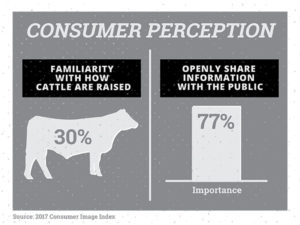
The workshop exposed agriculture trade media partners to the current discussion happening around beef and sustainability, and consumer insights and market research related to beef sustainability. According to the 2017 Consumer Image Index, only 30 percent of consumers say they are familiar with how cattle are raised, but 77 percent of consumers think it is important for beef producers to openly share production information with the public.
In discussion about consumer behavior perspectives on beef sustainability related issues, Dr. Glynn Tonsor, Ph.D., Kansas State University Agricultural Economics Faculty Professor, said, “The world needs and wants more protein. New sources will continue to arise, but there is room for both conventional and new protein items.” According to Kim Stackhouse-Lawson, Director of Sustainability at JBS USA, sustainability will be a top five demand driver over the next 20 years. To ensure consumers know the facts about beef sustainability, the Beef Checkoff conducts research to better understand the needs of today’s consumer.
Leading the Way
Quantifying the sustainability of beef is challenging, as the supply chain is one of the most multifaceted food systems in the world. However, the beef industry paved the way with the checkoff’s comprehensive lifecycle assessment which quantifies and benchmarks environmental, social and economic aspects of the beef industry from 2005 to 2011. Most recent work aimed to quantify important environmental impacts of beef cattle production systems for each of seven regions of the U.S. and then, use those regional assessments to determine national impacts of cattle production. Additional studies shared during the workshop focused on human edible feed conversion research (upcycling) and the economic value of beef cattle ranching and farming-based ecosystem services.
“Our industry continues to make advancements and improvements in the sustainability of U.S. beef production,” concluded Place. “Thanks to beef checkoff efforts, we are positioned as credible experts and work to communicate these positive messages throughout the beef value-chain.”

 When asked about checkoff activities, two out of three producers said “informing producers about the results of beef checkoff programs” was essential. The Cattlemen’s Beef Board invests a small percentage (about 3.5 percent) of its total budget to keep all producers informed about what their money is accomplishing. This year, funding will be spent on an initiative called
 We all know that our industry continues to face challenges from various action groups.


 Donna Moenning, a facilitator of the


 Long gone are the coupon clipping days and instead, modern shoppers can access recipes, cooking tips and product rebates right from their smartphones. The checkoff continues to find value in focusing on influencing the shopper’s buying decision before they step foot inside the grocery store.
 Additionally, the Beef Checkoff’s NEBPI partnered with the East Coast online retailer giant,

 We heard that beef meals are a favorite on school lunch menus across Pennsylvania and we encouraged attendees to learn more about beef at the conference. The Pennsylvania Beef Council (PBC) and the Beef Checkoff’s Northeast Beef Promotion Initiative (NEBPI) are a year-long sponsor with the association, which enables beef to be a resource and exhibit at their annual meeting. This year, foodservice directors had the opportunity to attend the speaking session titled “Meet the People Behind Beef,” an interactive discussion session highlighting beef’s nutrient density and facilitated a question and answer segment with a local beef producer, veterinarian and meat scientist.

 The tour was held June 25-27, and featured a visit to a cow-calf ranch, feedlot, and the JBS beef processing facility in northern Colorado. Attendees also took part in presentations from beef experts to help reinforce beef’s role in a sustainable food system, received ideas for incorporating sensory and beef umami exercises into their classrooms, and had an opportunity to participate in a beef cooking competition that demonstrated their culinary talents.
 The on-air media segments were featured during the Sunday Brunch portion of WBAL-TV’s morning program. During the first segment Chef Bill shared the use of leftover beef as an ingredient in a delicious and nutritious

 The checkoff’s Executive Chef, Dave Zino attended the Camp Foodservice Director Conference and conducted a 60-minute educational session title, “Heating up the Camp Fire with Beef” where he demonstrated three youth-friendly ground beef recipes featured on the Beef. It’s What’s for Dinner. website.
 Ryan Goodman, Director of Grassroots Advocacy and Spokesperson Development with the National Cattlemen’s Beef Association, a contractor to the Beef Checkoff, hosted a Media Training session and Mock Interviews attendees. His session left the chefs with confidence and skills to help prepare for any kind of interview or demo opportunity – phone, radio, on-air. Laura Hagen, Senior Director of Culinary with the National Cattlemen’s Beef Association was on-hand to share the logistics of on-air demonstrations.